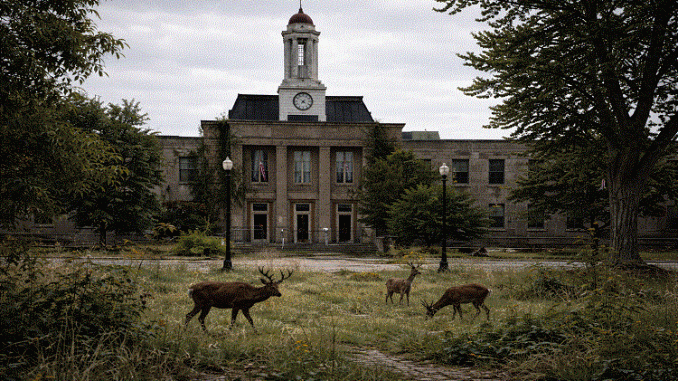
Monday night at City Hall wasn’t about decisions. It was about lining them up.
The April 13 General Committee meeting did what these meetings are designed to do: move things into place so that when Council votes next week, it all feels inevitable. No drama, no surprises — just a series of files advancing one step closer to becoming policy.
One of the more concrete items on the table was a proposed 10-unit residential development on Parkhill Road West, moving through the planning process with the usual mix of staff support and measured scrutiny. It’s not a skyline project. It won’t redefine the city. But it’s exactly the kind of incremental density Peterborough is quietly built on — one small approval at a time.
At the same time, council continued navigating the ongoing tension between development and heritage, particularly around older properties where designation can either preserve character or complicate redevelopment. These aren’t clean decisions. Every heritage vote carries two narratives: protecting the past or slowing the future, depending on where you sit.
There were also municipal land considerations moving through discussion — the kind of behind-the-scenes items where the city decides what it owns, what it might sell, and what it might turn into housing. These don’t generate headlines, but they matter. Land is leverage. Once it’s gone, it’s gone.
And then there was the tone of the room.
General Committee meetings aren’t built for performance. They’re built for alignment. Councillors ask questions, but rarely to discover something new. More often, it’s to signal position — to show where they’re leaning before the vote happens. Staff present. Council listens. And somewhere in that exchange, the outcome starts to settle.
By the end of the night, nothing had technically been decided.
But most of it had.
That’s the part of the process that doesn’t get much attention. The public sees the Council meeting, the formal vote, the final tally. But the real movement happens here — in the quieter week, where resistance is tested and consensus forms.
What didn’t take centre stage Monday is just as telling.
There was no sustained focus on homelessness, despite its continued visibility across the city. No deep dive into affordability beyond the assumption that more units, eventually, will help. No revisiting of the tax pressure already set in motion by the 2026 budget.
Those issues are still there. They just don’t fit neatly into a single agenda item.
Instead, council keeps moving forward on what it can control: planning files, land use, incremental development, and the internal mechanics of how decisions get made.
That’s the pattern.
Peterborough isn’t debating its direction anymore. It’s implementing it.
Monday night didn’t change the city.
It just moved it a little further along.
And next week, when Council votes, it will look like a series of decisions were made.
In reality, most of them already were.